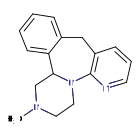
Mirtazapine is a tetracyclic antidepressant used in the treatment of major depression and is used off-label as a drug for insomnia and to increase appetite. Mirtazapine is a tetracyclic piperazino-azepine antidepressant agent that was initially approved for the treatment of major depressive disorder (MDD) in the Netherlands in 1994.
- Mechanism
- Curator reviewed · 6 references
Summary
The mechanism of action of mirtazapine is not fully understood but may be explained by its effects on central adrenergic and serotonergic activity. This drug exhibits a fast onset of action, a high level of response, a manageable side-effect profile, and dual noradrenergic and serotonergic effects that are unique from the effects of other antidepressants.
Effects on various receptors
It has been shown that both noradrenergic and serotonergic activity increase following mirtazapine administration. The results of these studies demonstrate mirtazapine exerts antagonist activity at presynaptic α2-adrenergic inhibitory autoreceptors and heteroreceptors in the central nervous system. This is thought to lead to enhanced noradrenergic and serotonergic activity, which are known to improve the symptoms of depression and form the basis of antidepressant therapy.
Mirtazapine is a strong antagonist of serotonin 5-HT2 and 5-HT3 receptors. It has not been found to bind significantly to the serotonin 5-HT1A and 5-HT1B receptors but indirectly increases 5-HT1A transmission.
In addition to the above effects, mirtazapine is a peripheral α1-adrenergic antagonist. This action may explain episodes of orthostatic hypotension that have been reported after mirtazapine use. Mirtazapine is a potent histamine (H1) receptor antagonist, which may contribute to its powerful sedating effects. The pain-relieving effects of mirtazapine may be explained by its effects on opioid receptors.
- Primary indication
- This drug is indicated for the treatment of major depressive disorder and its associated symptoms.Curator reviewed · 15 structured indications
- Formula / weight
- C17H19N3 · 265.3529 g/mol (avg)
- First approval
- Canada, 2004 · United States, 1996
- Also known as
- 6-Azamianserin · Mepirzapine
- Code names
- Org 3770
- Brand names
Resolves to
RONZAEMNMFQXRA-UHFFFAOYSA-NSMILESCN1CCN2C(C1)C1=CC=CC=C1CC1=C2N=CC=C1What you can answer from here — as of September 23, 2026
Which drugs share a target with Mirtazapine, and which of those have an active Phase 3 trial?
Create a free account or log in to explore the full data card.
Create Account